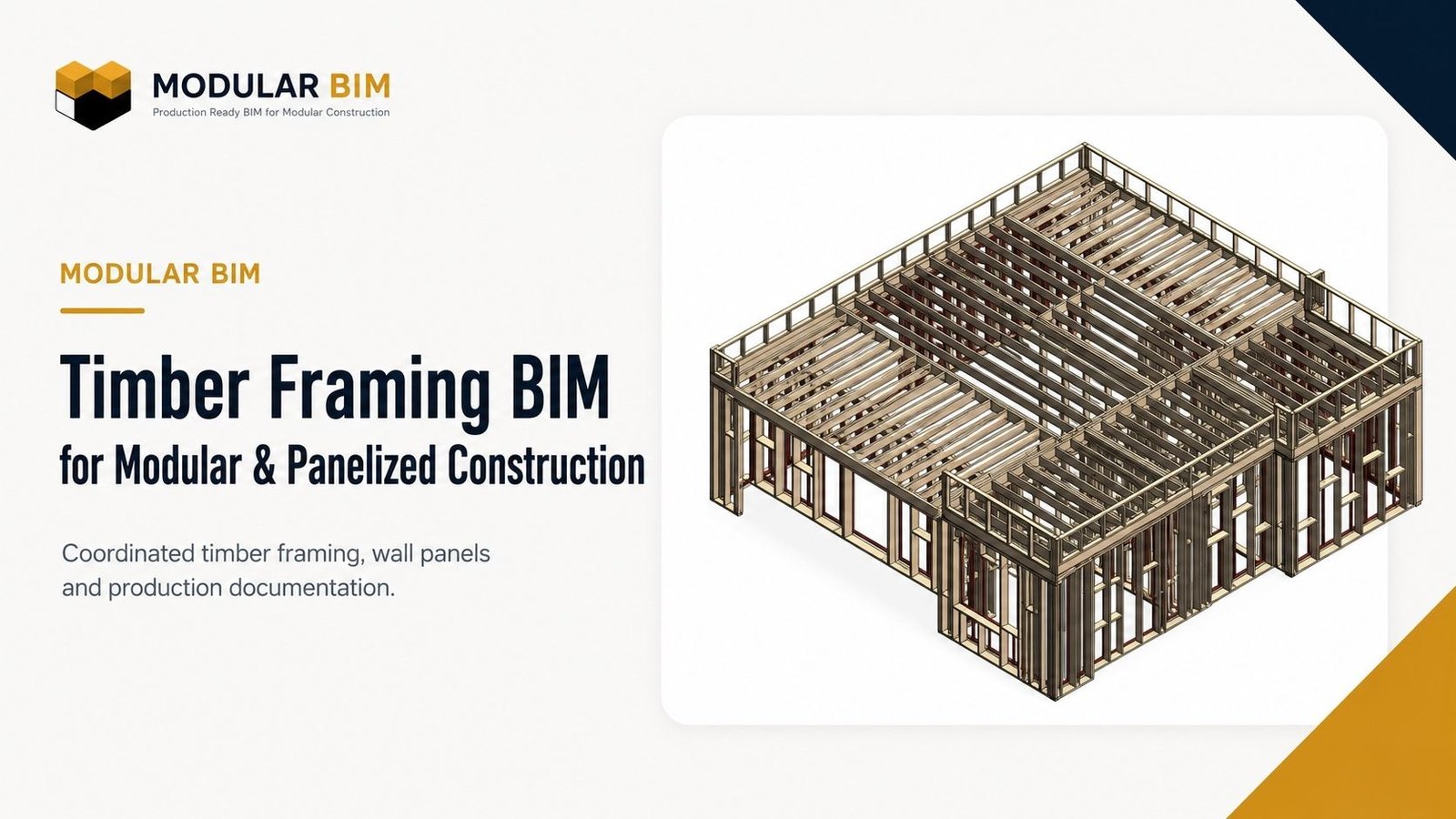
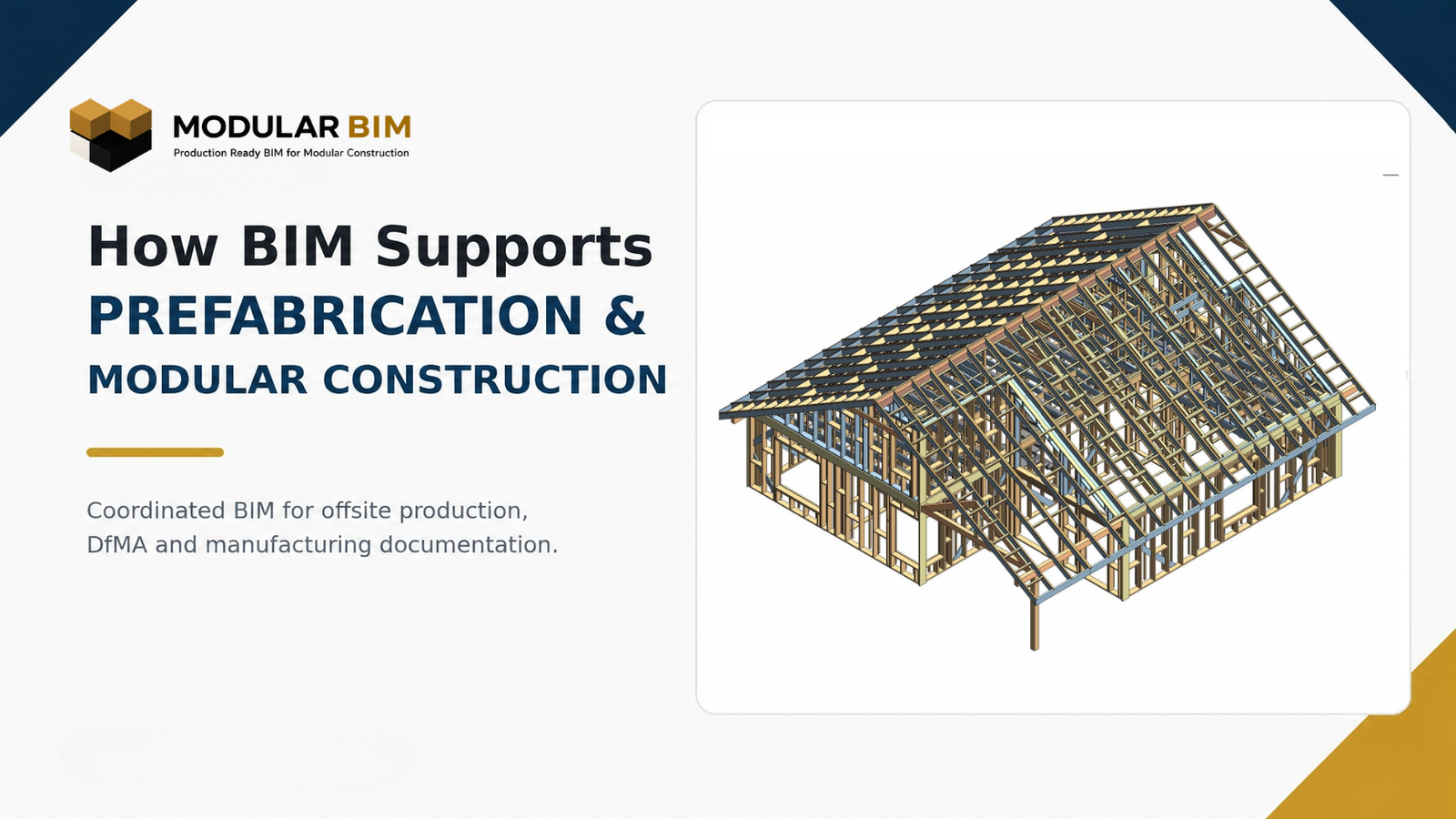
Timber Framing BIM for Modular and Panelized Construction
-
Faisal Khan
-
August 28, 2026
-
Blog
-
0 Comments
By Faisal Khan | Modular BIM | Founder & CEO, Pro Building Designer Timber framing is well suited to modular and panelized construction because walls, floors, roofs and other assemblies can be developed as repeatable building systems before they reach the construction site. But a detailed timber model alone does not make a project ready for offsite production. For modular …
Continue Reading
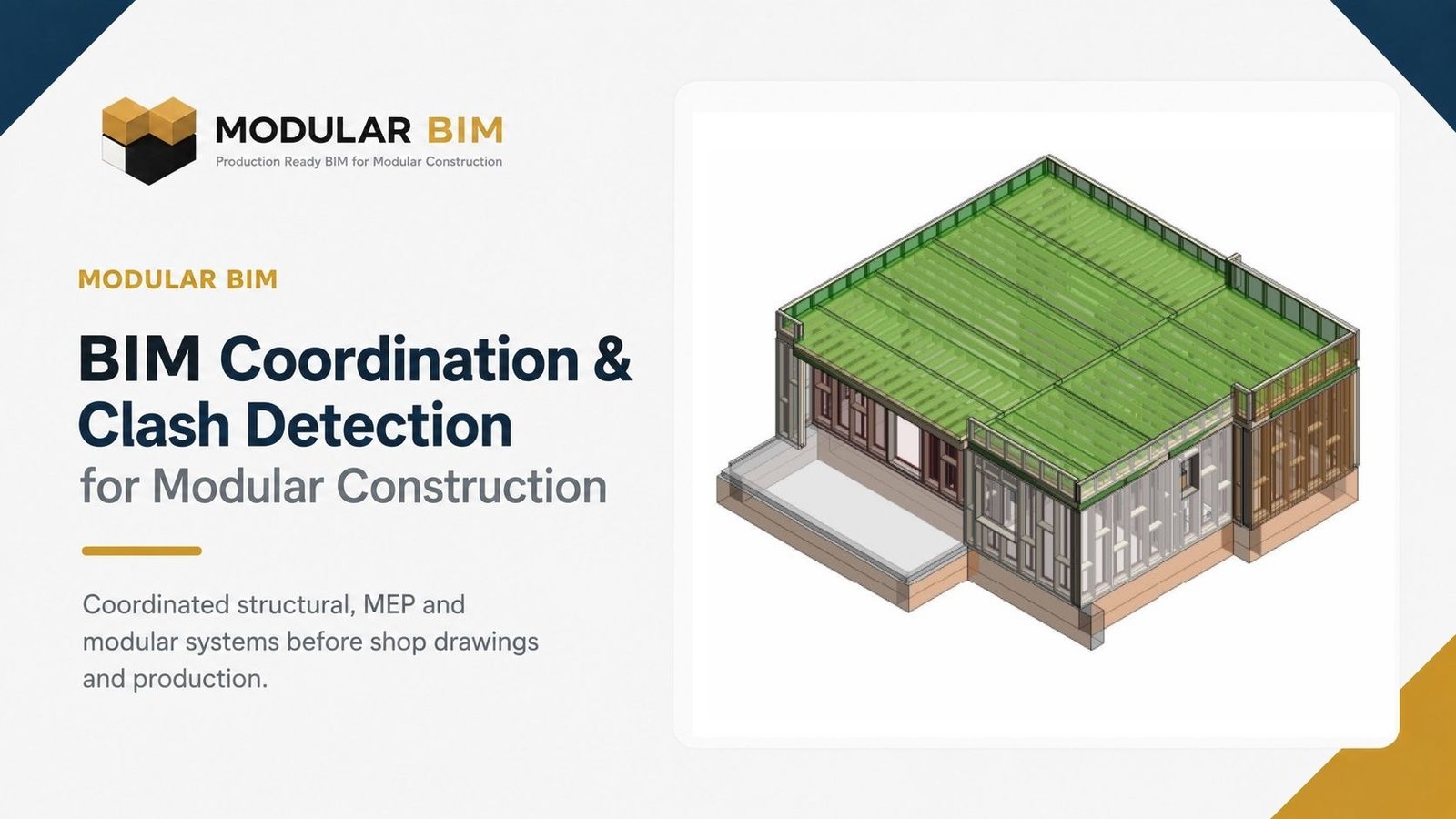
BIM Coordination and Clash Detection for Modular Construction
-
Faisal Khan
-
August 22, 2026
-
Blog
-
0 Comments
By Faisal Khan | Modular BIM Specialist | Founder & CEO, Pro Building Designer Modular construction depends on multiple building systems fitting together before those systems reach manufacturing. Structural framing, MEP services, wall assemblies, floor and roof systems, openings, penetrations and module interfaces often occupy the same limited space. If those relationships are not coordinated early, a conflict discovered after …
Continue Reading
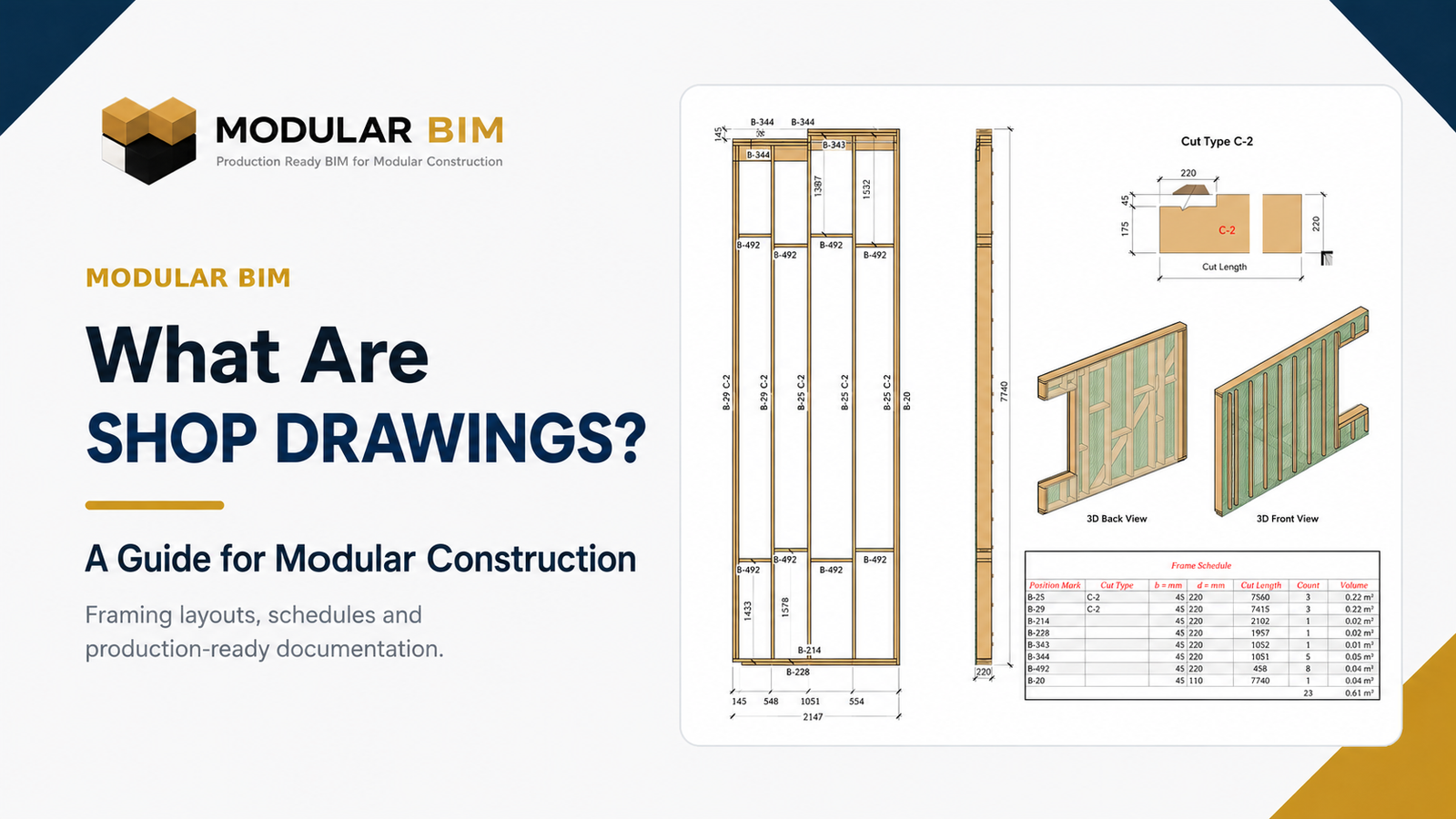
What Are Shop Drawings? A Guide for Modular Construction
-
Faisal Khan
-
August 18, 2026
-
Blog
-
0 Comments
Shop drawings are detailed technical drawings used to communicate how specific building components, assemblies or systems are to be fabricated, coordinated or assembled. In modular construction, shop drawings can translate coordinated BIM information into production-oriented documentation for timber framing, wall panels, floor and roof cassettes, light-gauge steel systems and other prefabricated components. They sit much closer to the actual component …
Continue Reading
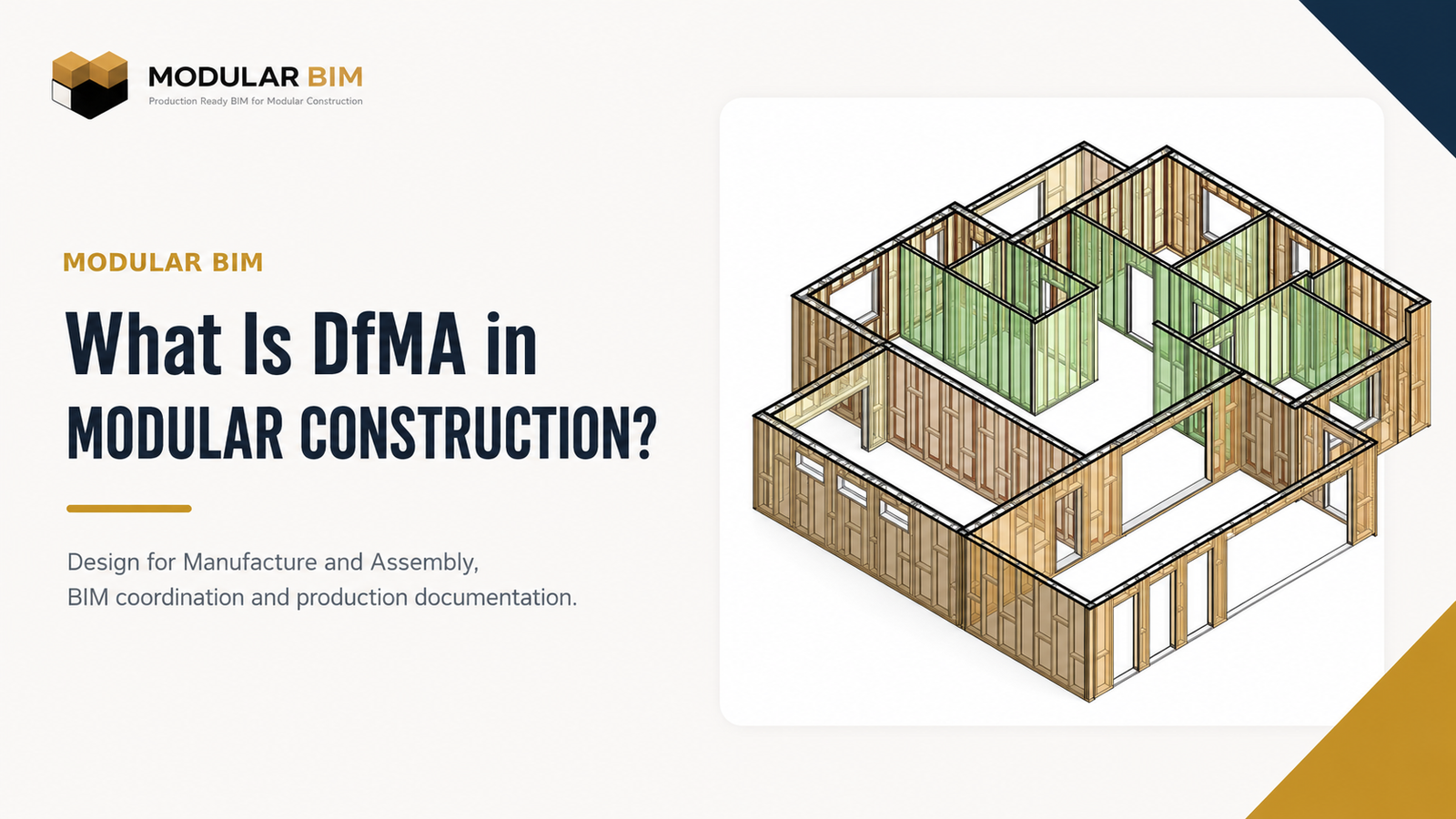
What Is DfMA in Modular Construction?
-
Faisal Khan
-
August 15, 2026
-
Blog
-
0 Comments
DfMA is increasingly discussed across modular, prefabricated and offsite construction, but the term is often reduced to a simple idea: “designing something so it is easier to manufacture.” That is only part of the picture. DfMA stands for Design for Manufacture and Assembly. In construction, it is an approach that considers how building components and systems will be manufactured, coordinated, …
Continue Reading
How Does BIM Facilitate Prefabrication and Modular Construction?
-
Faisal Khan
-
August 11, 2026
-
Blog
-
0 Comments
Prefabrication and modular construction move a significant part of the building process away from the construction site and into a controlled production environment. That changes the way project information needs to be developed, coordinated and communicated. In traditional construction, some coordination issues can still be resolved during installation on site. In modular and offsite construction, that flexibility is reduced. Wall …
Continue Reading