







Capture Your Drawing Standards Once: Numbering, Sheets and Outputs
Every factory reads its drawings in a particular way. Panels are numbered to a scheme, sheets follow a layout, and outputs go to the saw, the roll-former or the assembly table in a set format. When those standards live only in people’s heads, every new project, and every new drafter, risks a slightly different pack.
What a factory’s standards include
Drawing standards cover more than a title block. Typically they include:
- panel, part and sheet numbering schemes
- sheet layouts, scales and view conventions
- naming for members, profiles and materials
- the format of cut lists, schedules and machine outputs
- how revisions are issued and recorded
Captured once, applied every time
The answer is to capture those standards once and build them into a project template. Numbering rules, sheet layouts, view settings and schedule formats are set up before the first project starts. Every project after that inherits them automatically, so the pack looks and reads the same whoever draws it.
No standards yet?
Not every manufacturer has formal drawing standards, especially growing factories. In that case we bring our own proven system, with numbering, sheets and outputs designed for panel and module production, which the factory can adopt from day one and adjust over time.
Why it matters at volume
Consistent packs mean the floor doesn’t relearn the drawings on every job. Errors are easier to spot because anything unusual stands out. New team members, on our side or yours, follow the same rules from the start. And when a standard changes, it changes in the template once rather than on every sheet.
Job fifty should look exactly like job one. If your packs vary from project to project, talk to us about capturing your standards once.
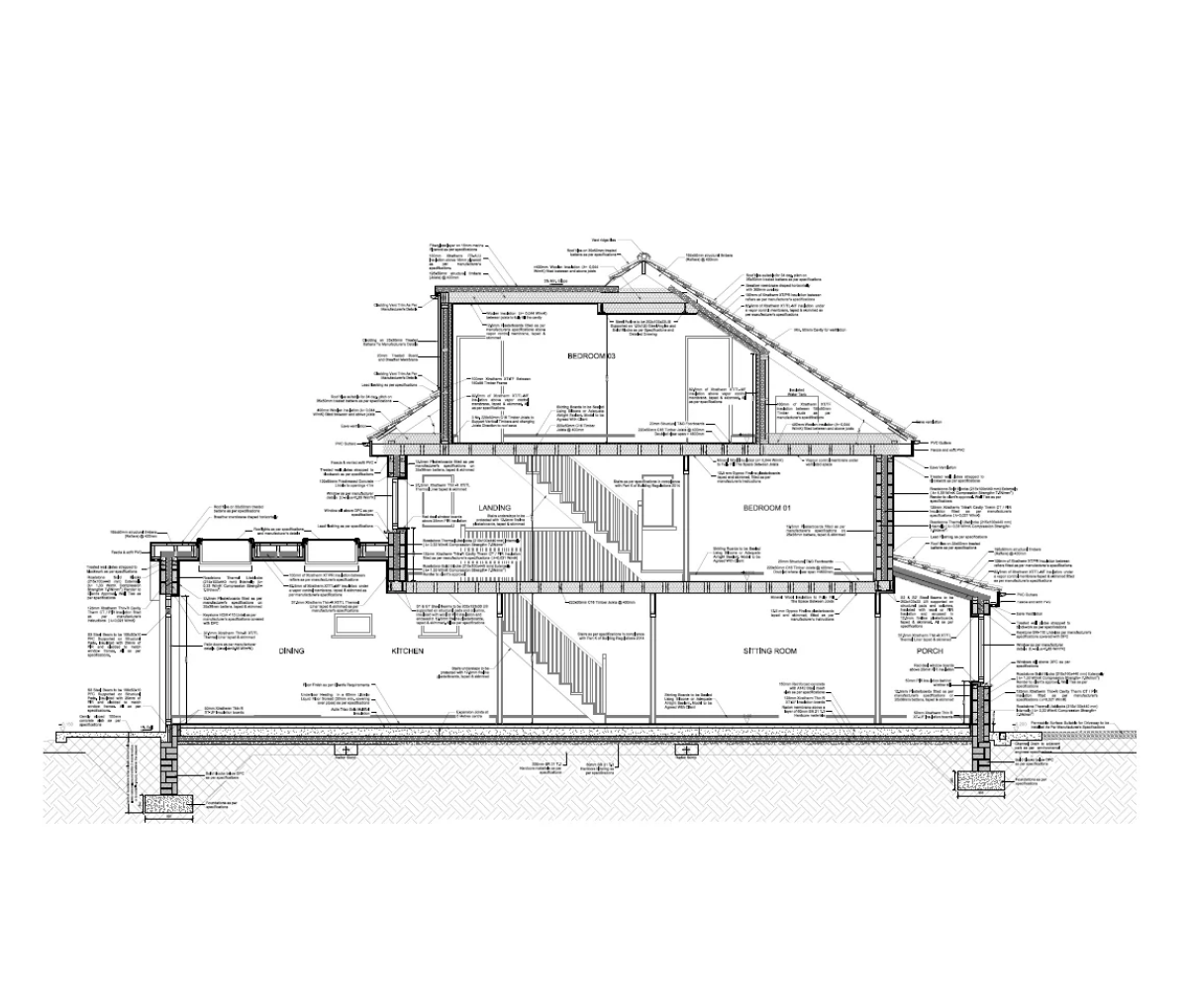
Featured image: Dwelling Section Drawing by Christophe Krief, CC BY-SA 4.0, via Wikimedia Commons.