






What a Roll-Former Needs From Light Gauge Steel Panel Drawings
Light gauge steel, also called cold-formed steel, is produced differently from timber. Members are roll-formed from coil, often with holes, notches and dimples punched in-line, then assembled into panels and trusses. The drawings and data behind that process need to match how the machine and the assembly table actually work.
Member data before drawings
A roll-former doesn’t read a panel elevation; it reads member data. For each member it needs the profile, the length and the position of every operation along it. That information has to come straight from the framing model so that what is rolled matches what is drawn. If members are scheduled by hand, the two drift apart the first time the design changes.
What the panel pack should include
A complete LGS panel set typically includes:
- panel elevations with every stud, track, header and brace
- a member schedule for each panel, named in the factory’s own profile library
- 3D framing views so the assembly team can see how members come together
- connection and fixing details where they are not standard
- machine files in the format the factory’s roll-former software accepts
- layouts showing where each panel and truss sits in the building
Profiles and naming
Every LGS factory has its own profile library: section sizes, gauges and naming conventions. The documentation should use them exactly. A member called one name on the drawings and another on the machine is an error waiting to happen on the assembly table.
Trusses, joists and modules
The same principles apply beyond walls. Floor joists and roof trusses need layouts, member schedules and connection details coordinated with the panels they bear on. For steel-framed volumetric units, each panel still gets its own elevation and schedule, while the unit drawings show how the panels come together into a module.
One model, every output
When framing, schedules and machine files all come from one model, a design change flows through every output at once. That is what makes LGS documentation reliable at volume: the line receives the same format, in the same naming, every time.
Running a light gauge steel line and want documentation built around your profiles and your machine? Book a call and tell us how your line works.
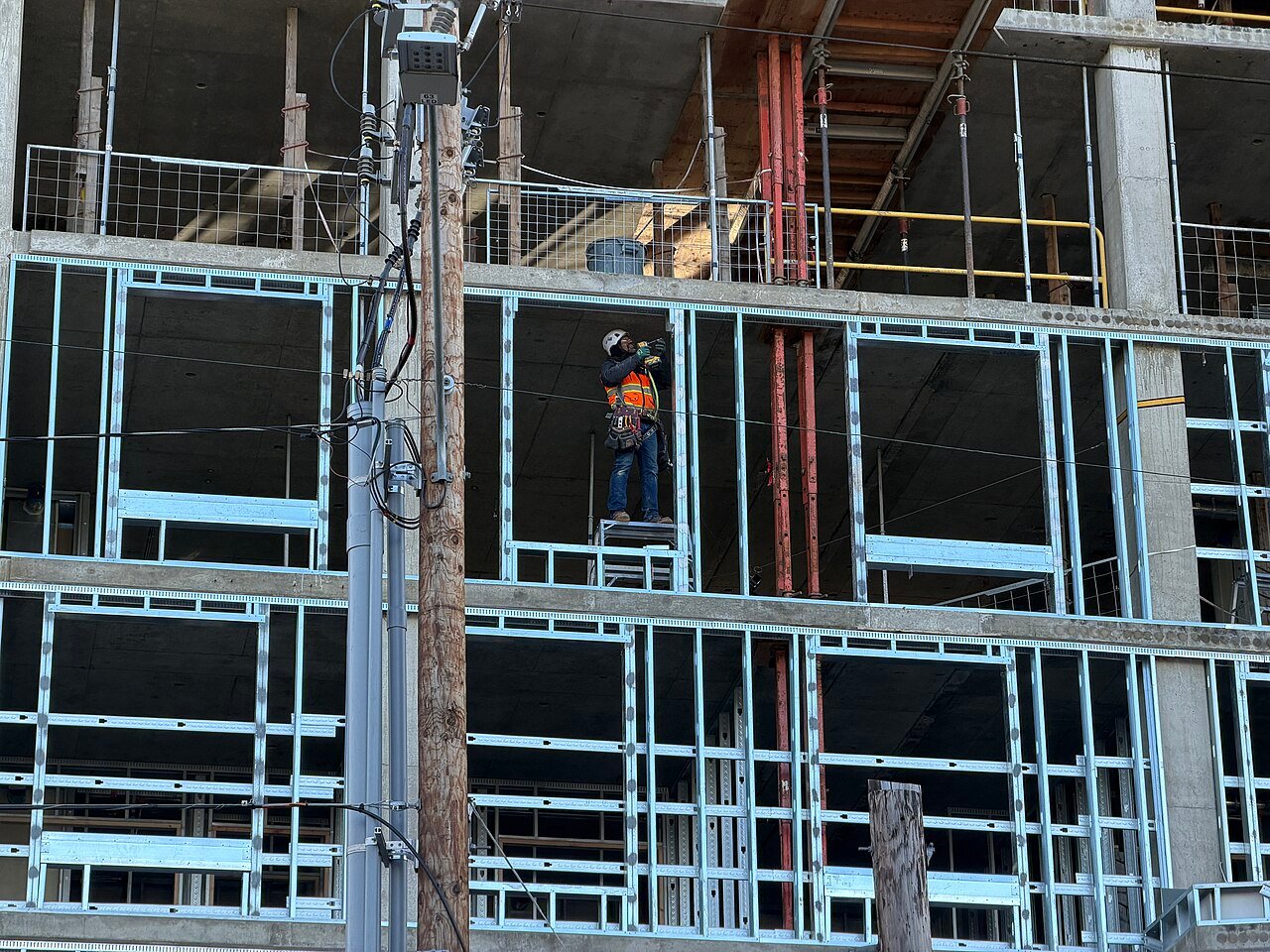
Featured image: Construction worker on steel framing of hollywoodHUB at Hollywood Transit Center, Portland, Oregon (January 2026) by PortlandAppraisalBlog, CC BY-SA 4.0, via Wikimedia Commons.